It’s not easy for a top restaurant to decide one day to just uproot its entire operations and move to a different location. The team behind Joo Ok decided to do the unthinkable by leaving behind its home in Seoul, Korea (where it has had two Michelin stars) to start over in New York City. I get that the Korean dining scene in the Big Apple lately has been flourishing lately, but it was still an extremely bold move. During our trip to New York last month, my wife Jun and I decided to check out with a long-time friend of ours what the restaurant led by chef Shin Chang-ho was cooking up in the middle of Koreatown. The way to the restaurant was rather peculiar; we rode a freight elevator up to the 16th floor while passing through lower floors, some of them blasting sounds from the bar music. We were led to a lovely space with some welcome drinks and snacks and then to the main dining room. At this point, Jun and I had been to some of the top Korean fine dining restaurants in NYC and Seoul and I was somewhat worried that our heightened expectations from the previous experiences having dined at places like Atomix might make us too spoiled to enjoy the meal at Joo Ok. We were pleased to be proved wrong; the dinner at Joo Ok was quite outstanding.


Even after moving to America, chef Shin’s sustainable farm-to-table approach to his original restaurant hasn’t changed. In fact, he has doubled down, growing ingredients locally at a farm in Upstate New York and making the jang (Korean sauce) in-house. A few of the snacks that greeted us made me realized that Joo Ok was not an ordinary restaurant, with using three different types of jang (ganjang (soy sauce based), gochujang (red pepper based) and doenjang (soybean based)) and a variety of ingredients such as braised chicken, American wagyu and foie gras to great effect. The beautiful looking dish of mool hoe (think chilled raw fish soup), consisting of an assortment of squid, sea urchin, scallop, persimmon and butternut squash in dashima jelly, was wonderfully refreshing, and the playfully plated langoustine prepared three ways, in combination of ingredients such as caviar, herring roe and scallion wrap, was also delicious, especially with the spicy kick from sauce made of chungyang gochujang and serrano pepper. One dish that Jun couldn’t stop admiring was the jat jeup chae. On top of cucumbers which covered lightly poached lobster, lotus root and Korean pear, our server poured a sauce made of jat (pine nut), which provided a nutty flavor that worked so harmoniously with the other ingredients. My favorite dish, on the other hand, was deul gi reum (translating to perilla oil). The oil itself, according to our server, was prepared in person by chef Shin’s mother-in-law. It was a small dish but the complexity of flavor spearheaded by the earthy perilla oil underneath the quail egg, caviar, spotted shrimp and geoduck was nothing short of exceptional.


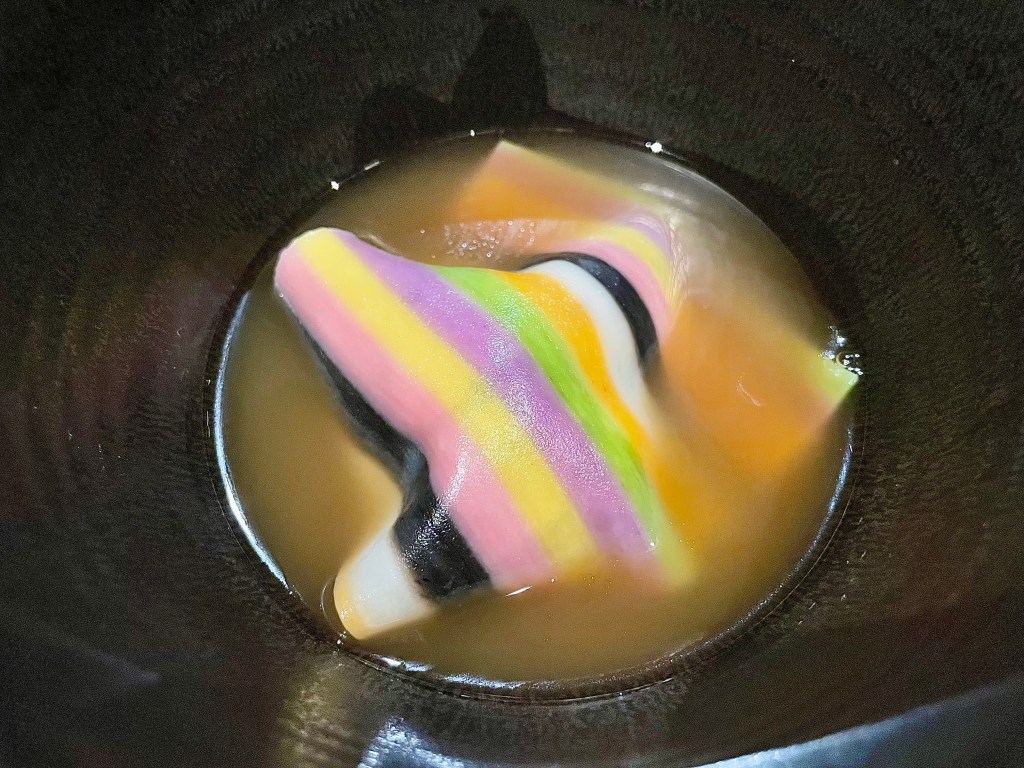
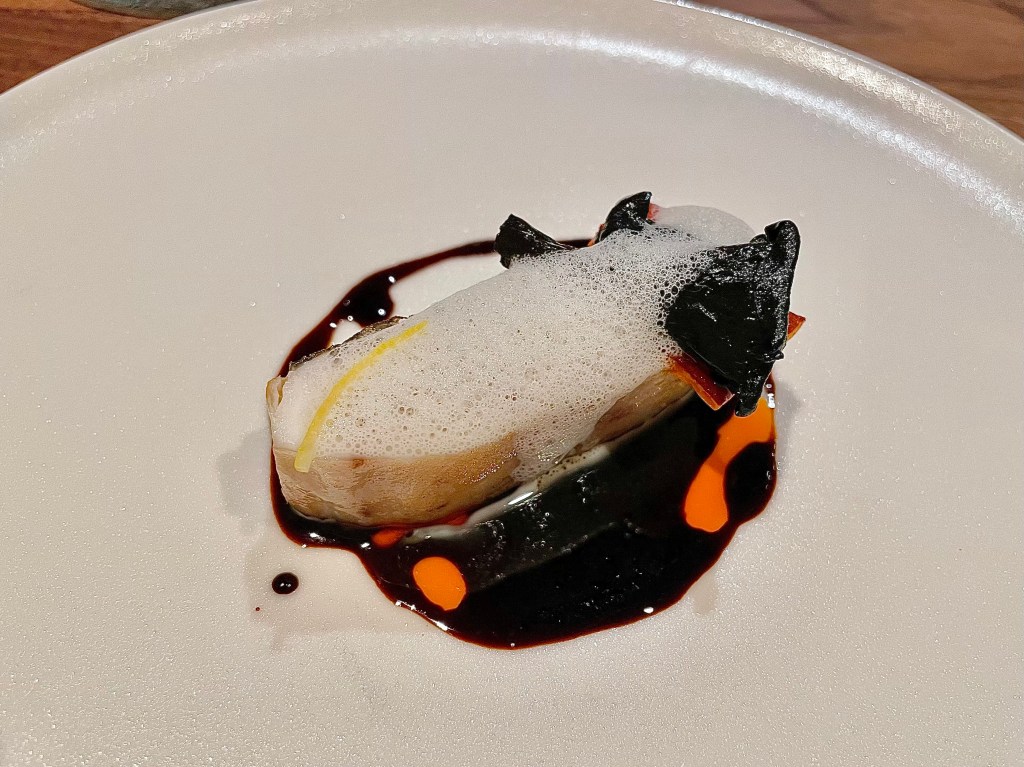
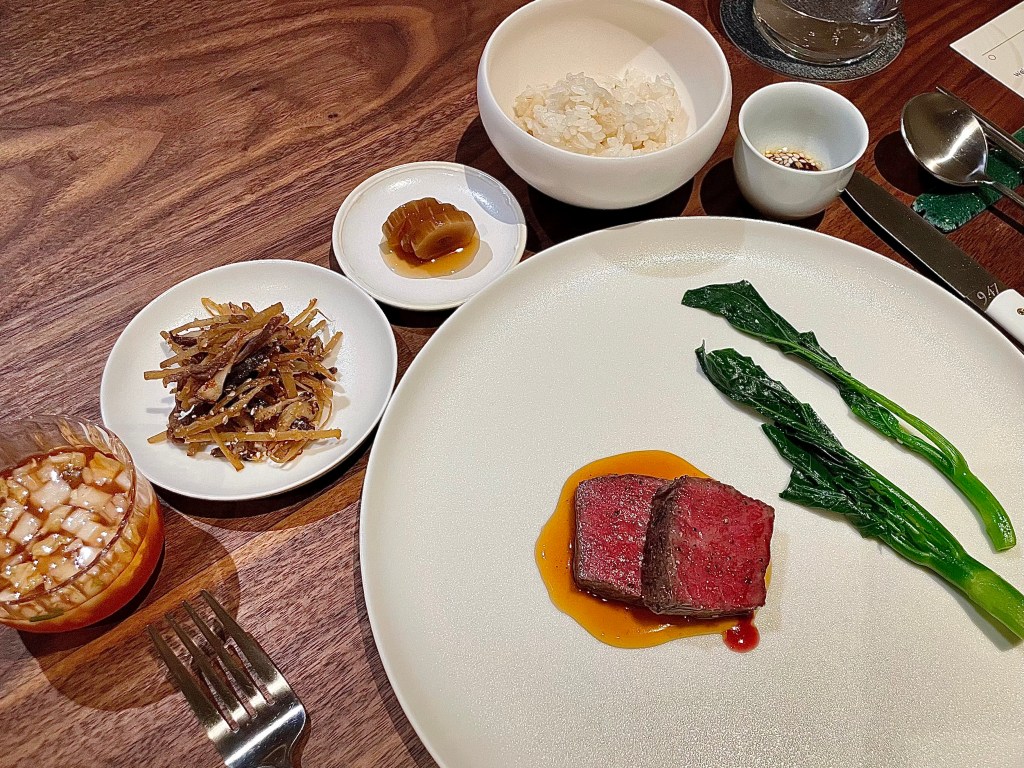
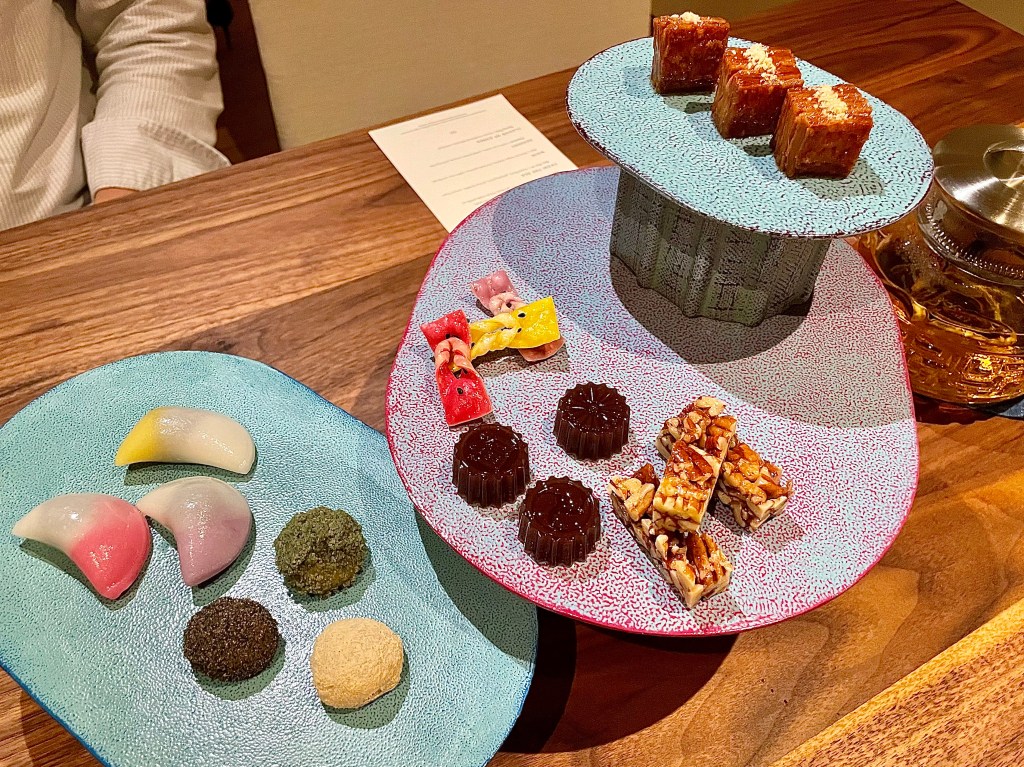
We also enjoyed other dishes from the Fall & Winter menu such as makgeolli bread with eel and sweet corn on top and then wrapped by deep-fried gamtae (a rare type of seaweed from Korea) as well as the colorful dumpling made of sekdong (modeled after Korean traditional clothes hanbok) sujebi dough with pheasant meat inside. For the main seafood course, we both appreciated the kitchen’s attempt to show a different side of texture from a semi-dry aged striped bass, but also agreed that it might not be for everyone who is not familiar with this texture. For the main meat course, the Mishima wagyu striploin was not surprisingly quite tasty, and even better with an assortment of radish rice, burdock and mul kimchi. The dessert also stood out, with walnut ice cream and sweet potato mousse showing that the kitchen is just as ambitious when it comes to desserts as all the top-quality savory dishes that came before. For the finale of the meal, we were pleasantly surprised to find an assortment of byung gwa (Korean traditional sweet delicacies) as well as tteok (rice cakes) created from scratch. It really showed that, even with its modern approach, the core Korean identity of Joo Ok has not been compromised one bit.


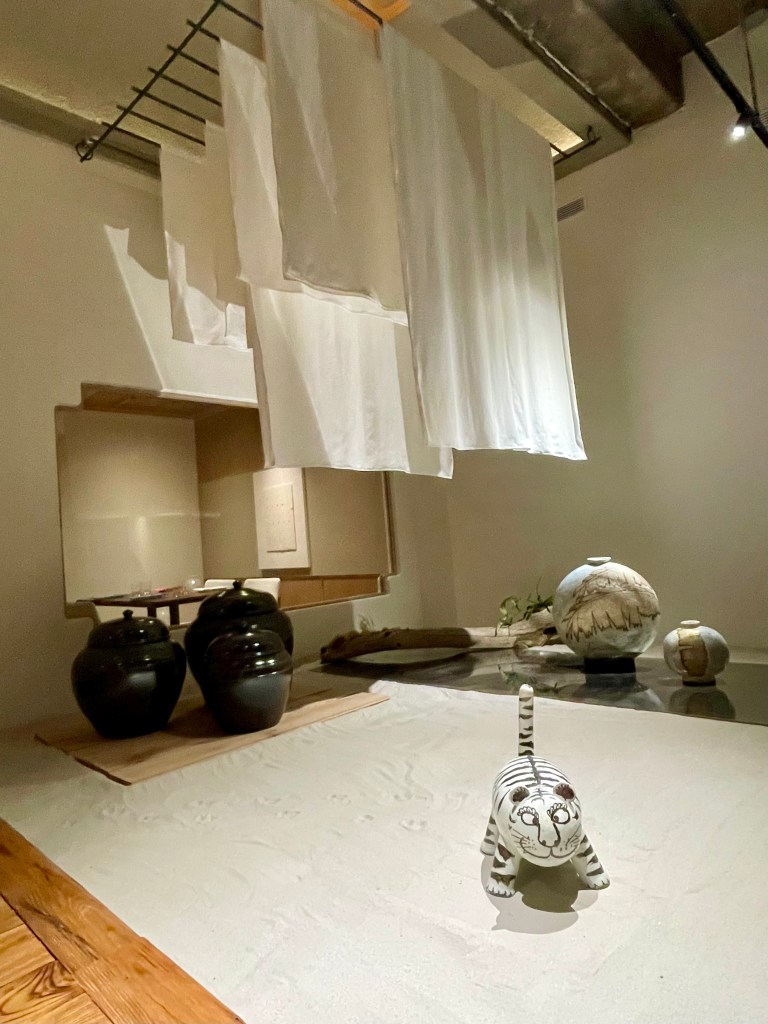
I made to book a table at Joo Ok as soon as the reservation window opened. As I’m writing this in December, all the reservations other than Christmas specials this month were fully booked, so I would make sure to keep in track when the next reservation window opens and open the Resy app ASAP. The modern dining space modeled in the style of hanok (a traditional Korean home) was very thoughtful, and I was also very impressed with the beverage list featuring an expansive collection of wines from all over the world as well as a variety of native Korean beverages to complement the meal. We were happy to see a staff member that we previously knew from another restaurant in the city, and other service staff members (many of them moved here from Seoul to follow chef Shin) were all friendly and attentive. We don’t usually compare restaurants to one another when evaluating them, but I think Jun was on point when she said Joo Ok seems to be in this sweet spot between the very high-end experience of Atomix and the more casual but no less delicious offering of Jua. While we live in the DC area, we won’t have as many opportunities to experiment with new restaurants while visiting New York City, but we both agreed that Joo Ok will be one of the spots that will be on our repeat visit list. We hope this restaurant thrives and is rewarded handsomely for its bold adventure across the Pacific.
KenScale: 8.75/10 (Jun’s Score: 8.75/10)
Address: 22 West 32nd Street 16th Fl., New York, NY 10001
Website: https://www.joo-ok.com/
Reservation via Resy
 KenScale