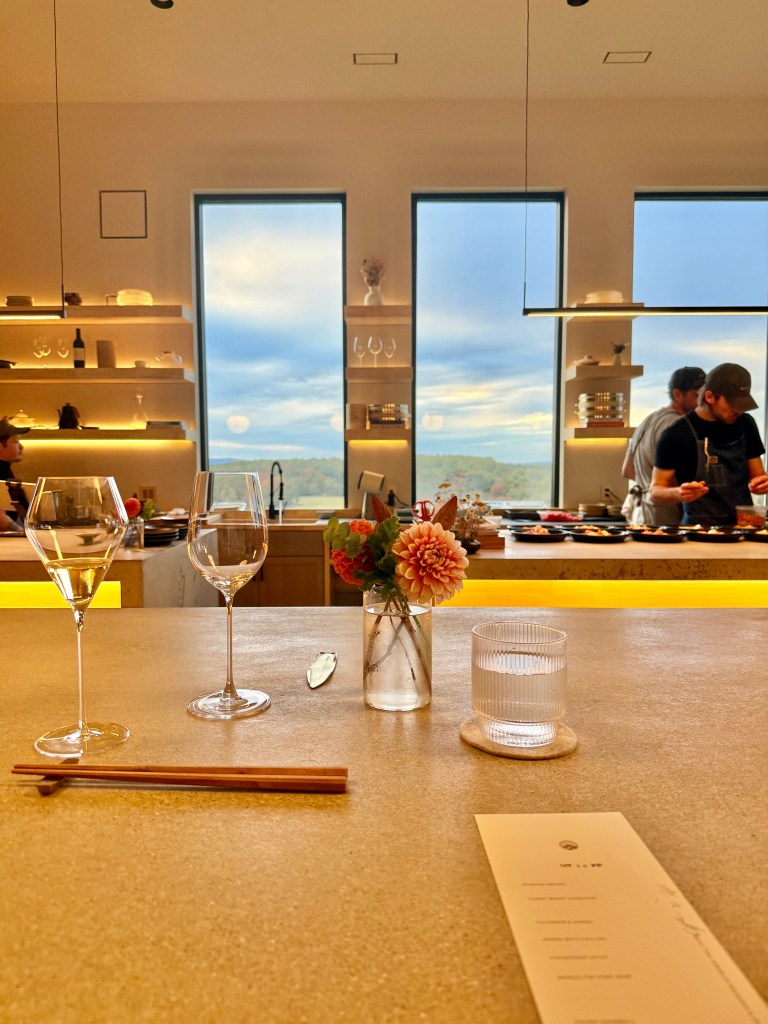
Earlier this year, my wife Jun and I discovered a winery in Maryland that has been getting significant amount of buzz. While we are certainly more into the wines from California and Oregon in the Stateside and have not quite found a go-to winery in the emerging Virginia, I was eager to see what the sibling team behind Burnt Hill Farm was up to. We visited for a Sunday afternoon tasting with some bites from the kitchen and had a lot to like about the experience; while the wines we felt hadn’t quite caught up with the world class standards from the West Coast, the venue was absolutely stunning and the overall vibe of the tasting experience was quite very fun and welcoming. We got a hold of the news later this year that the winery also decided to open a tasting menu counter with a chef named Tae Strain who led the kitchen at Momofuku’s DC branch. After striking out a few times on trying to secure a reservation, I finally was able to secure a reservation last month. The verdict: it was overall a mixed experience with some good and some puzzling aspects.
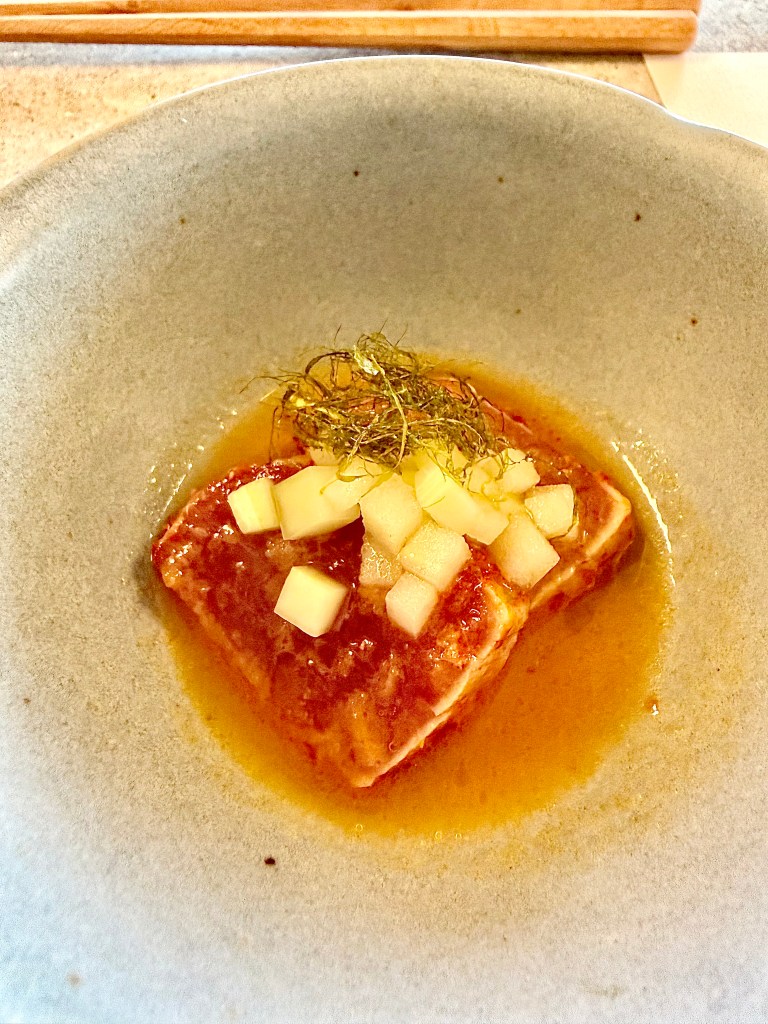
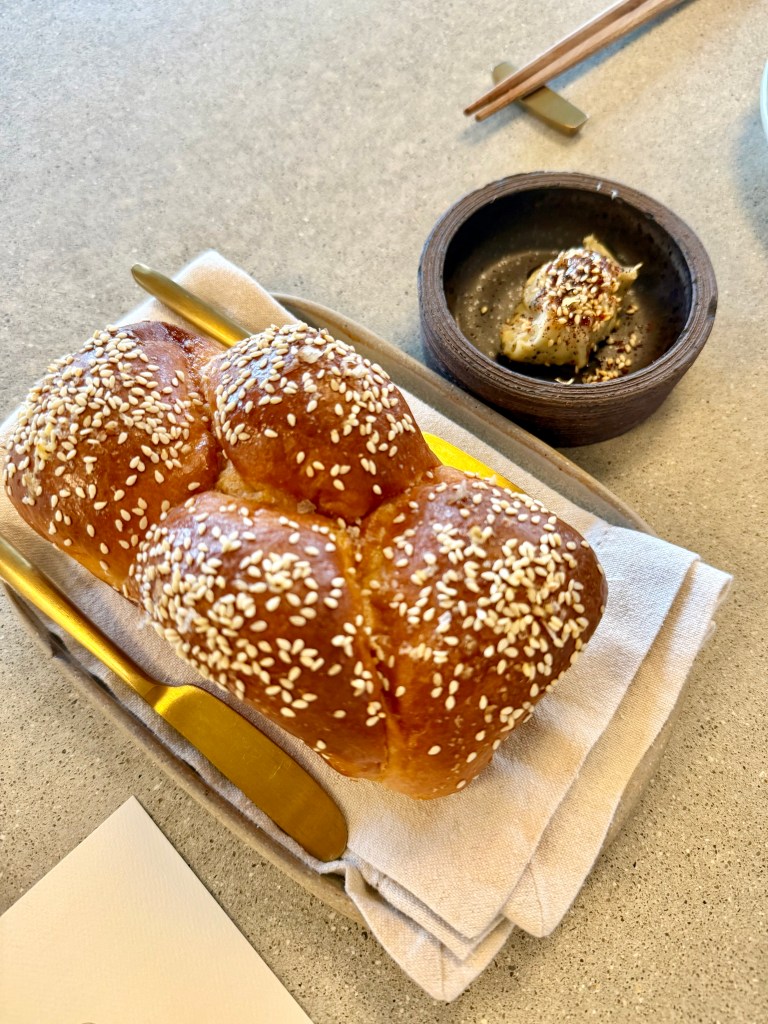
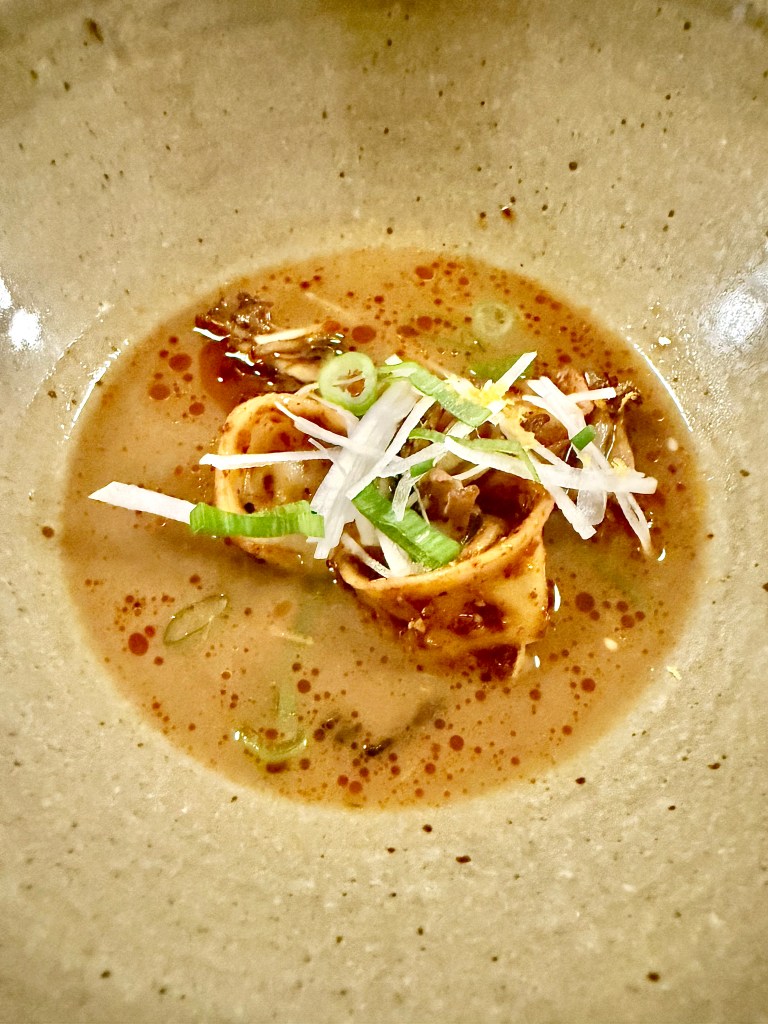
The tasting menu features local ingredients, many from the winery’s farm, that are prepared with Asian touches reflecting the chef’s Korean American background. As Jun and I are from Korean heritage, it’s not unfair to say we perhaps have impossible standards for Korean dishes at a restaurant. What we found at Burnt Hill Farm’s dinner table was more pan-Asian than Korean in the overall direction. Both of us have long had fairly mixed feelings about the fusion-y culinary philosophy of the Momofuku franchise and many of the dishes unmistakably showed the chef’s training there. Most notably, the dishes from the tasting menu generally leaned toward stronger flavor designed to stimulate the palate similar to the impression at Momofuku restaurants. There were some good dishes, for sure. If the popular Japanese milk bread (shokupan) with sesame brown butter were available for a la carte food option at the tasting room, we would gladly eat this super delicious bread again. The mandu dumplings with duck and pork fillings inside mushroom dashi broth were slightly aggressive on the seasoning but nevertheless worked fine. I was also a fan of swordfish with charred tomato curry.
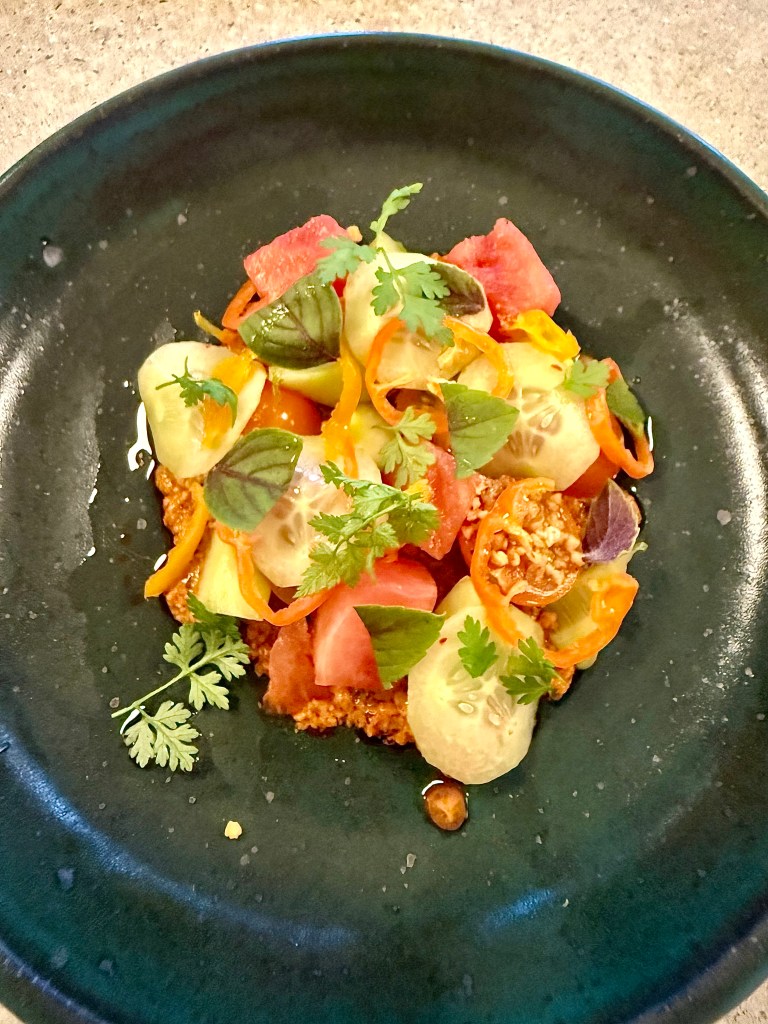
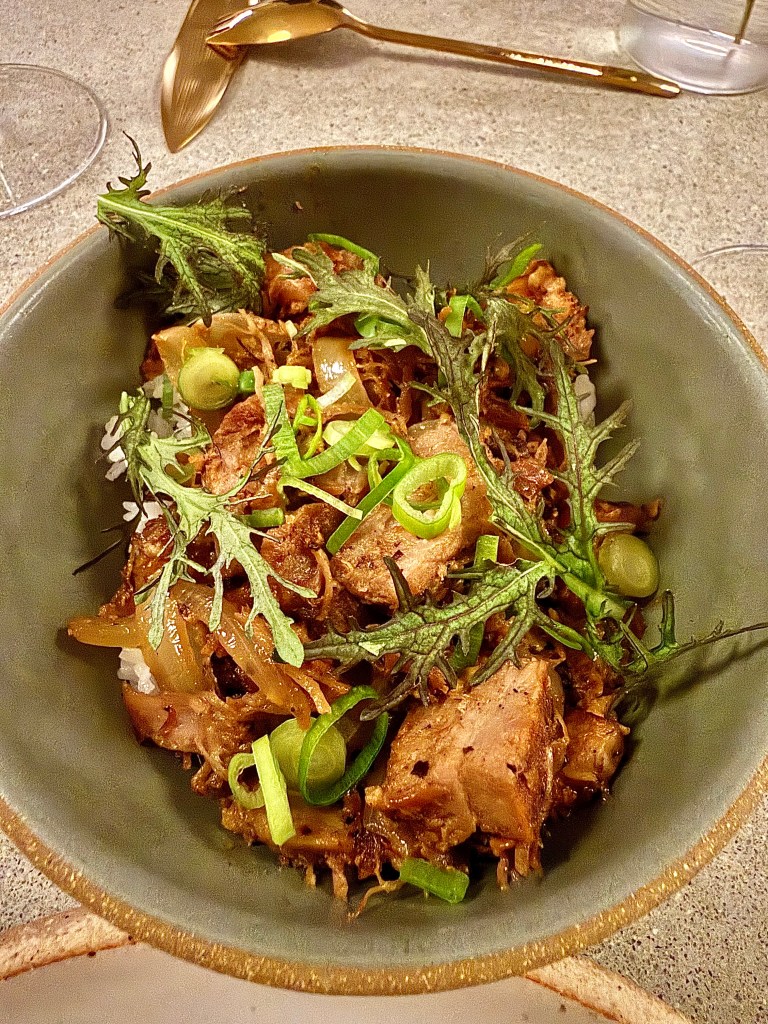
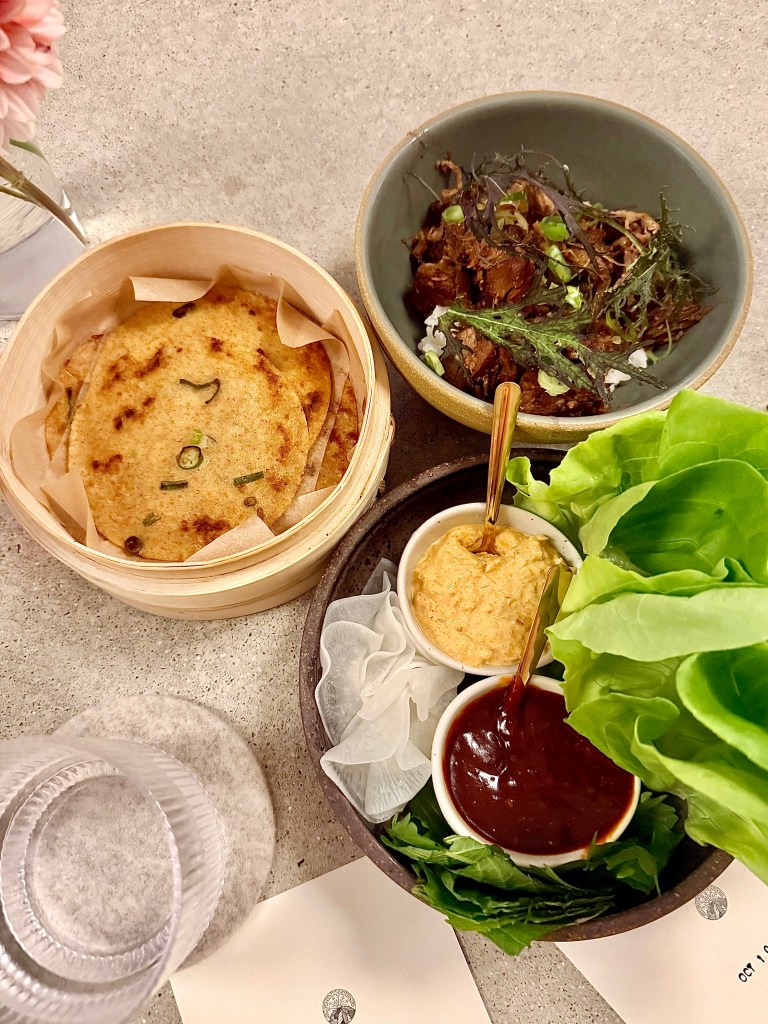
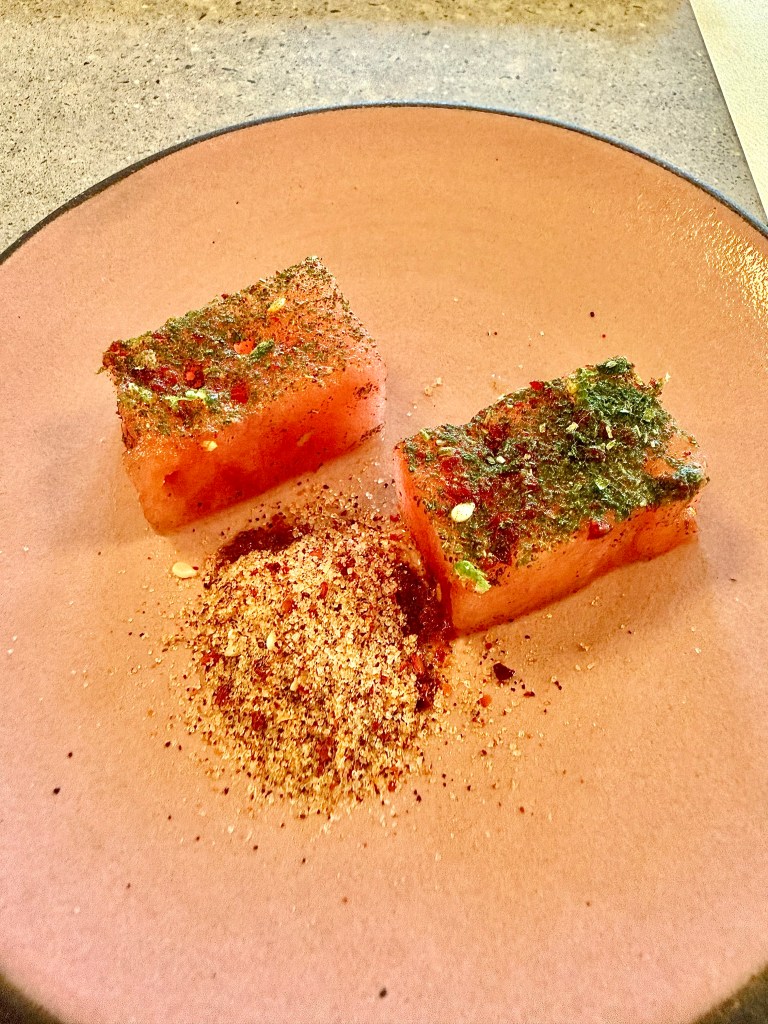
On the other hand, some dishes had too much going, like one of the opening snacks of watermelon where the Korean chili lime salt completely overwhelmed the fruit, or an assortment of cucumber and sambal accompanied by watermelon, sungold tomato, Virginia peanut and habanada sauce (it was a sensory overload with different sauces screaming for attention). The biggest disappointment was probably the Mangalitsa pork ssam, perhaps an homage to the famous ssam dish that made Momofuku Ssam in NYC a culinary sensation. The pork, from the pigs grown in the farm, was a hot mess from flavor (too salty) and texture (lacking the moist, juicy texture from the best pork dishes) standpoint, even with the vegetable and chive crepe wraps to help neutralize it. After the pork ssam, the chef’s take on Baltimore snowball with strawberry granita, watermelon and marshmallow was a welcome respite to the overwhelmed palate. We finished the dessert section with stone fruit and sesame cobbler followed by a dish with chocolate, brown butter financier and Virginia peanut; neither made a particularly memorable impression.
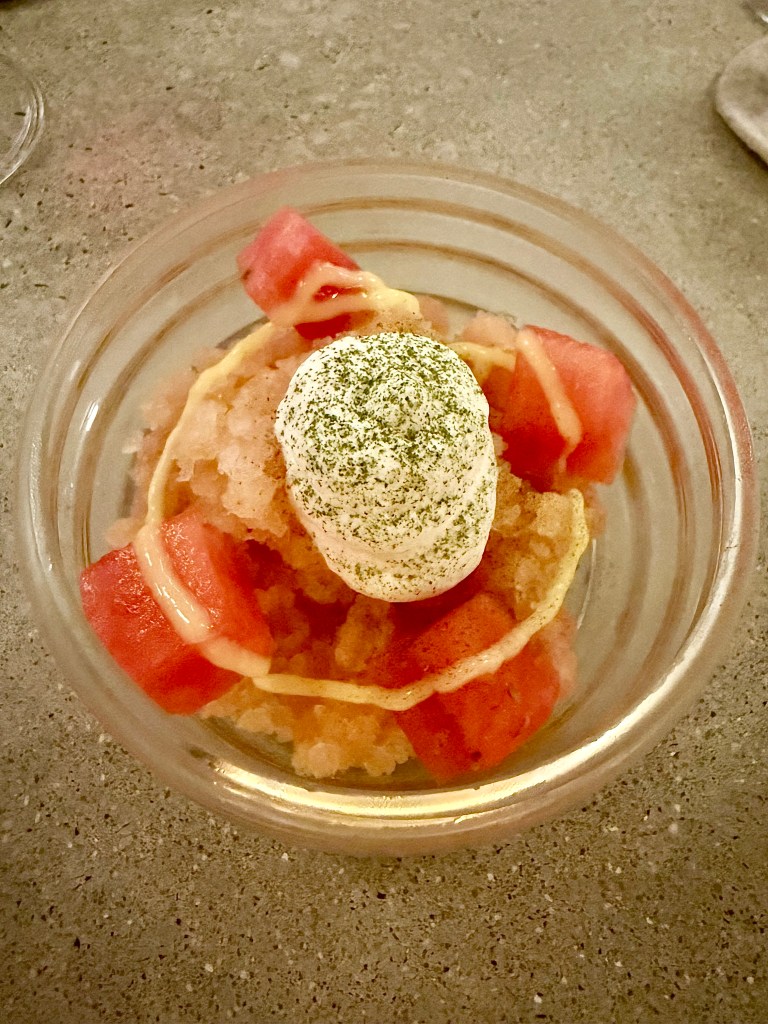
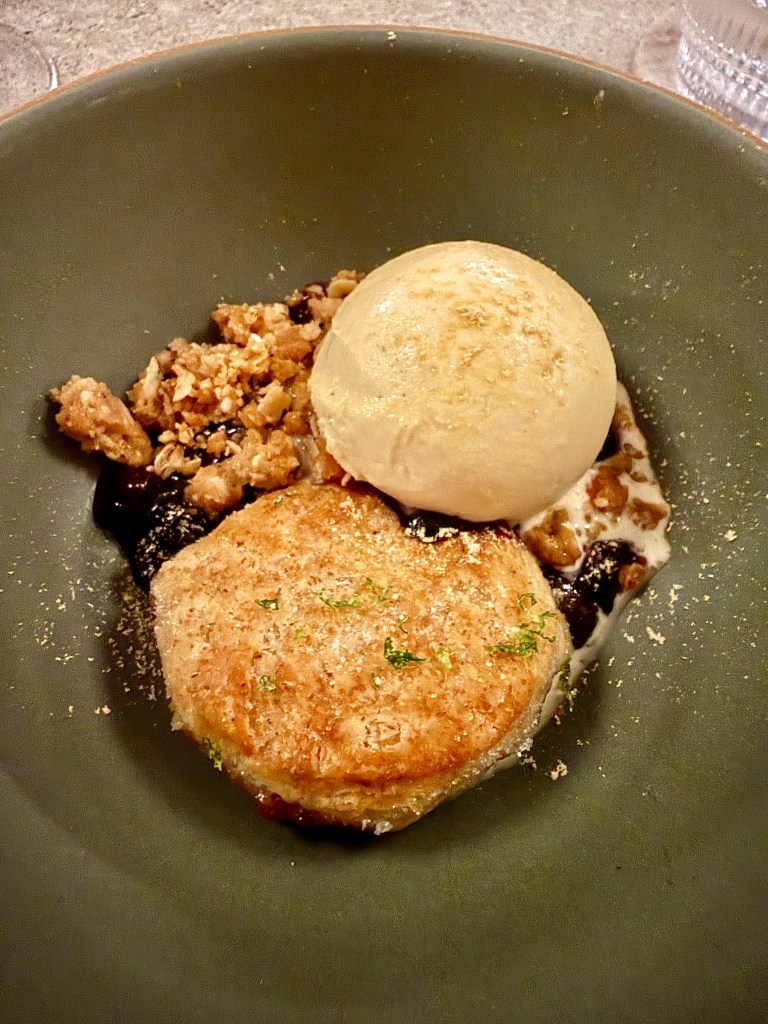
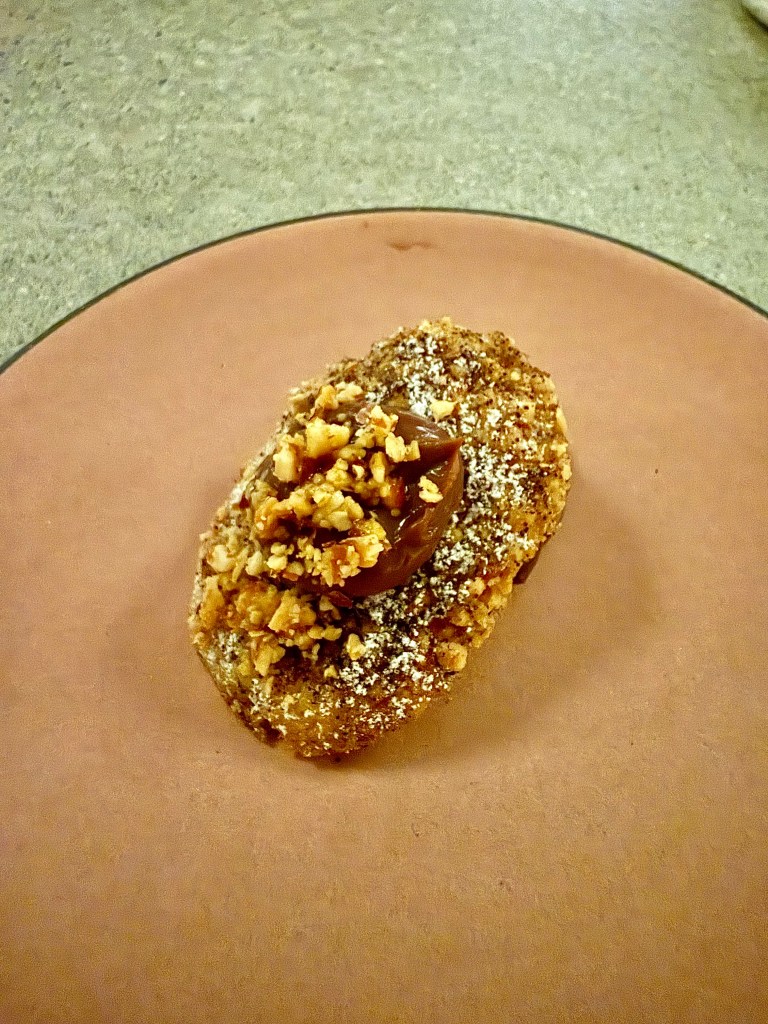
As I mentioned above, getting a reservation for the dinner has been more and more challenging, especially after the tasting menu space won over accolades (including being one of 50 best U.S. restaurants in New York Times recently). Throughout the meal, we had different wines coming from the winery as well as its sister winery Old Westminster; I was bummed that we were not able to try at least one glass of Pinot Noir from the winery and we got to try two different Bordeaux blends instead in the red section. We both did feel that Burnt Hill Farm’s wines probably need a bit more seasoning to get to the level of top-class wines, while appreciating that Maryland’s terroir is probably not as hospitable as the celebrated West Coast regions. Another drawback of the dining experience was the overall pacing. We understood that chef Tae was operating with just two staff members at his kitchen, but the glacial pace between the dishes killed the momentum from time to time. On the positive side, the dining counter overlooking the vineyards was very pretty, and the service was overall friendly and attentive. Ever since our beloved Reverie left DC, we were hoping to find a go-to restaurant in the DMV area that could find ourselves going back to again and again as a regular; at this point, I don’t think Burnt Hill Farm is that place, but I also admit that our culinary journey and familiarity with Korean cuisine probably impacted our assessment, and have a feeling many people might disagree with my assessment of the food here (especially if they are partial to Momofuku style). For the time being, we would be glad to come back to the winery for another leisurely afternoon with wine tasting but probably not for the full tasting menu dinner in the near future.
KenScale: 7.75/10 (Jun’s Score: 7.75/10)
Address: 25001 Burnt Hill Road, Clarksburg, MD 20871
Website: https://www.burnthill.farm/
Reservation via Tock

